
Bioinformatics
Utilize Computational Tools and Resources to Turn Data into Actionable Knowledge
29/11/2023 - 30 November 2023 ALL TIMES EST
The Bioinformatics track will assemble thought leaders who will present case studies using computational resources and tools that take data from multiple-omics sources and align them with clinical action. Generating real-world data for real-world evidence solutions can lead to real-time assistance in disease prevention, prognosis, diagnostics, and therapeutics. With the ever-increasing volume of information generated for curing or treating diseases and cancers, bioinformatics technologies, tools, and techniques play a critical role in turning data into actionable knowledge to meet unstated and unmet medical needs.
Wednesday, 29 November
Registration and Morning Coffee
Plenary Keynote
PLENARY KEYNOTE PROGRAM
Chairperson's Remarks
Welcome Remarks
PLENARY KEYNOTE CO-PRESENTATION:
MOSAIC: A Global Initiative to Deploy Spatial Omics and AI against Cancer

In June, Owkin and world-leading Cancer research institutions and technology companies from the US, France, Germany, and Switzerland unveiled MOSAIC, a $50 million initiative to use spatial omics technologies at unprecedented scale. The aim is to analyze the tumor microenvironment of more than a thousand patients in each of seven difficult-to-treat cancers and to develop and apply AI/ML tools to develop a spatial omics atlas that will help to advance novel therapies. In this session, we will present the scientific vision, the aims and role of participating institutions, and an update on progress in the project's first six busy months.
Grand Opening Coffee Break in the Exhibit Hall with Poster Viewing
MULTIMODAL DATA FOR TARGET PREDICTION & PRECISION DIAGNOSTICS AND RESEARCH
Organizer's Remarks
Emily Byrer, Room Operations Lead, Cambridge Healthtech Institute , Room Operations Lead , Cambridge Healthtech Institute
Chairperson's Remarks
Edward Farmer, PhD, Strategic Communications Consultant, Genomics England , Strategic Communications Consultant , Genomics England
Panel Moderator:
PANEL DISCUSSION:
A First Look at National-Scale Multimodal Cancer Research in Practice
Panelists:
Gene Prioritization Using a Genetics-Led Approach for Target Discovery of ALS
We have developed a genetics-based approach that integrates functional data from GWAS, ontologies, and biological networks to predict potential drug targets with evidence for disease association. We obtained a list of target genes associated with ALS and prioritized potential target genes by integrating structural information and cell-type expression data. The work that I will present is an excellent example of using genetics and multimodal data to predict drug targets associated with ALS. Our results suggest that data augmentation and integration with cell-type gene expression networks can improve performance for predicting drug targets and emphasizes the importance of multi-omics data & network approaches for target prediction.Â
Sponsored by: Accelerated Drug Development through Scalable AI-Powered Medical Imaging

Shelby Wyatt, PhD will discuss how AI-based medical imaging helps imaging/data scientists, innovators, and healthcare professionals accelerate drug development initiatives and projects and move the needle towards personalized healthcare. She will discuss how Flywheel builds reliable, scalable medical imaging solutions that seamlessly integrate advanced AI technology from solutions such as NVIDIA and Microsoft to enable robust imaging data management and analysis.
Sponsored Presentation (Opportunity Available)
Networking Lunch in the Exhibit Hall with Poster Viewing (Sponsorship Opportunity Available)
ENGAGING THE BIOMEDICAL COMMUNITY WITH HIGH-PERFORMANCE COMPUTING
Chairperson’s Remarks
Andrea Townsend-Nicholson, PhD, Professor of Biochemistry and Molecular Biology, Division of Biosciences, University College London , Professor of Biochemistry and Molecular Biology, Division of Biosciences , Structural & Molecular Biology , University College London
Panel Moderator:
PANEL DISCUSSION:
Engaging the Biomedical Community with High-Performance Computing

Panelists:
Sponsored Presentation (Opportunity Available)
Session Break and Transition to Plenary Keynote
Plenary Keynote
PLENARY KEYNOTE FIRESIDE CHAT
Chairperson’s Remarks
Allison Proffitt, Editorial Director, Bio-IT World and Clinical Research News , Editorial Dir , Bio-IT World
PLENARY KEYNOTE FIRESIDE CHAT:
Data Citizenship and Changing Data Culture
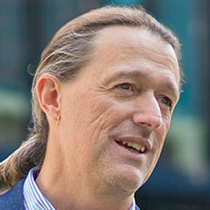
With thirty years of experience in informatics and data and big pharma positions at Roche and AstraZeneca, Bryn Roberts has a unique perspective on the data-growing pains now facing life sciences. Within life sciences organizations, there are both responsibilities and privileges associated with data production and use, he says. Data producers should share data within certain parameters, and data consumers should use and credit data fairly, he believes. In this fireside chat, Stan will interview Bryn who will share his insights into the state of data right now in life sciences, why data citizenship is the paradigm shift we all need to embrace, how to truly create a FAIR data culture, and how artificial intelligence and machine learning will most impactfully change our data landscape.
Welcome Reception in the Exhibit Hall with Poster Viewing
Close of Day
Thursday, 30 November
Registration and Morning Coffee
Plenary Keynote
PLENARY KEYNOTE PROGRAM
Chairperson’s Remarks
Cindy Crowninshield, Executive Event Director, Cambridge Healthtech Institute , Executive Event Director , Cambridge Healthtech Institute
Keynote Introduction
PLENARY KEYNOTE CO-PRESENTATION:
East London: A Global Hub for Digital Precision MedicineÂ
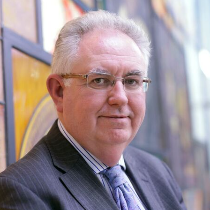
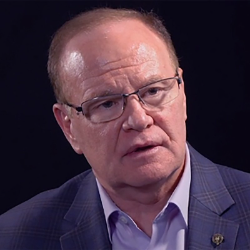
Barts Health NHS Trust and Queen Mary University of London (QMUL) are embarking on one of the world's most ambitious digital medicine initiatives. Director of the NIHR Barts Biomedical Research Centre, Prof Mark Caulfield, and newly appointed QMUL Honorary Professor Tom Chittenden will lay out this vision and its impact on patients and science. In one of the largest and most diverse NHS trusts, in the heart of the East London AI and medical research community, Barts and QMUL are investing £600m pounds to create new digital healthcare infrastructure and develop a world-leading open-access exascale causal AI computing platform. This will enable a newly detailed understanding of the biology of cancer, cardiovascular, and other diseases, driving cutting-edge drug and digital health development relevant to people of every continental ancestry. These assets will deliver the most advanced digital precision medicine to millions of people in local communities, and, through research and industry partnerships, to people and patients worldwide.  Â
Coffee Break in the Exhibit Hall with Poster Viewing
COLLABORATIVE RESEARCH ACTIVITIES AND UPDATES FROM ICTBioMed
Organizer's Remarks
Emily Byrer, Room Operations Lead, Cambridge Healthtech Institute , Room Operations Lead , Cambridge Healthtech Institute
Chairperson's Remarks
Anil Srivastava, President, Open Health Systems Laboratory (OHSL) , President , Open Health Systems Laboratory, Inc.
International Consortium for Technology in Biomedicine (ICTBioMed) was created in 2013 by Open Health Systems Laboratory (OHSL), Poznan Supercomputing and Networking Center (PSNC), and the Centre for Development of Advanced Computing (CDAC) with the purpose of bringing together biomedical researchers on a computational platform for collaborative research. In this session, ICTBioMed teams will present some of their ongoing open science projects which would welcome international research partners.
KEYNOTE PRESENTATION:Â Importance of Emerging Technologies and Collaborations for Biomedical Research

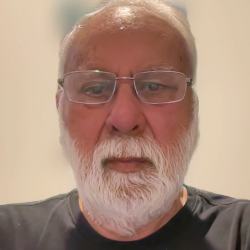
Effective transdisciplinary research using technologies such as machine learning and digital twins relies on multiple data modalities and a common data space, including global coverage. The ICTBIOMED consortium recognizes that a more holistic and consistent approach in developing interaction between all stakeholders is necessary to enable wide scale testing of new ideas and to provide an environment for sustainable growth of value-adding cancer research solutions.
Ayurveda Developmental Therapeutic Program and Whole-Person Health Research in the Context of International Cancer Knowledge Alliance at OHSL
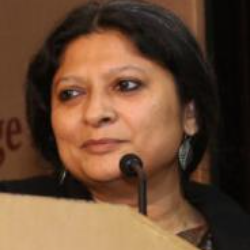
OHSL’s global team science approach utilizes an open science shared knowledge framework along with developments in the forefront of computational technology and biomedical research to address key challenges in biomedicine. Ayurveda Developmental Therapeutic Program is one such international collaborative effort between scientists in multi-disciplinary areas of expertise. Its aim is to examine Ayurveda, the principle of whole person health as an effective scientific system of medicine, and its application alone or in conjunction with conventional medicine, primarily in the areas of cancer management and therapy. The collaboration spans Ayurveda, western or conventional  medical science, multi-omics and high throughput computational technology including whole systems biology, digital twins, quantum computing and plant based drug design. This talk will cover some of this journey in the hope of opening avenues for further collaborations.
In silico Drug Design Using Plant Extract Using Knowledge Derived from Traditional Systems of Medicine
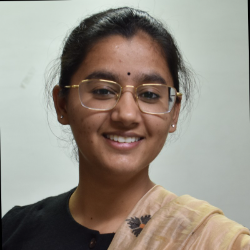
Use of herbal medicines for therapeutic purposes has a long recorded history. Despite therapeutic potential, these traditional medicines are not accepted globally because of the unknown composition and mechanism of action. Therefore, a rigorous analysis by modern science is required in order to provide a proof-of-concept for their therapeutic efficacy. In line with this, I look into bioactive compounds from natural sources as therapeutic agents.
KEYNOTE PRESENTATION: A Global Biomedical Digital Twin Network—A Path for Accelerating Access and Improving Precision Medicine and Healthcare Worldwide
The advent of personal biomedical digital twins is bringing together biopharma, the patient, the physician, and the community to improve the precision medicine of the individual. With many scientific advances and new technologies, the time is right for a global collaborative network to improve outcomes for each patient, using predictive models, real-world health information, and medical innovations. This presentation will share a path forward to reach this goal.
Closing Comments
Networking Lunch in the Exhibit Hall with Poster Viewing (Sponsorship Opportunity Available)
RESHAPING GENOMIC VARIANT ANALYSIS AND DRUG DISCOVERY WITH AI AND BIG DATA
Chairperson's Remarks
Mohamed Abouelhoda, PhD, Chairman, Computational Sciences Department, Center for Genomic Medicine, King Faisal Specialist Hospital & Research Center (KFSHRC) , Chairman Computational Sciences Department , Center for Genomic Medicine , King Faisal Specialist Hospital & Research Center (KFSHRC)
Can Artificial Intelligence and Big Data Techniques Overcome the Increasing Complexity of Variant Calling and Interpretation in a Clinical Setting?
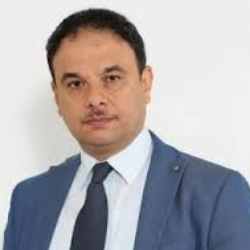
Genomic-based testing based on variant analysis is glowingly integrated in healthcare practice. The increasing demands for analyzing more samples quickly, integrating more knowledge bases, and periodic re-analysis of samples pose challenges that if not handled carefully would lead to missing mutations, wrong outdated classification, and interpretation errors. Learn how artificial intelligence techniques in the era of ChatGPT, coupled with big data, can address these problems and improve overall performance.
Leveraging Nonlinear Dynamics and Applied Bifurcation Theory for Enhanced Drug Discovery

Bioinformatic methodologies play a vital role in unraveling the intricate mechanisms and pathogenesis underlying complex diseases. Recognizing that diseases are dynamic processes rather than static entities, it becomes imperative to employ methods that can effectively analyze and extract temporal features from molecular and clinical data to facilitate drug discovery in the realm of precision medicine. This presentation introduces a novel set of tools based on nonlinear dynamics and applied bifurcation theory that can be seamlessly integrated into the drug discovery pipelines.
Presentation to be Announced
Close of Conference


#BioITExpo

2023 CONFERENCE PROGRAMS